What Is Medical Intuition? One Man’s Journey From Trauma to Spiritual Awakening
Can someone intuitively sense what is happening in another person’s body?
It is a fascinating question—and one that sits right at the intersection of spirituality, intuition, healing, and discernment.
In my conversation with Patrice Krysztofiak, we explored how a period of intense grief, depression, legal stress, and fear completely changed the direction of his life.
What began with meditation eventually led Patrice away from a career in IT and toward work he now describes as medical intuition, energy perception, and somatic healing.
His story includes vivid inner imagery, physical sensations, dreams, meditation, energy work, emotional release, and an increasing trust in what he believes he intuitively perceives in others.
But there is an important distinction to make from the beginning:
Medical intuition is not medical diagnosis.
Patrice is not a physician or healthcare provider, and he does not present his work as a replacement for appropriate medical evaluation or treatment.
That distinction is essential whenever we explore intuitive healing.
Prefer to Watch?
In this episode of the Spiritual Spotlight Series, Patrice Krysztofiak and I explore medical intuition, spiritual awakening, meditation, somatic experiences, energy healing, trauma, self-trust, and what it means to follow inner guidance while remaining grounded.
Key Takeaways
Patrice’s spiritual awakening began during one of the darkest periods of his life.
He describes medical intuition as receiving images, bodily sensations, dreams, and strong inner knowing.
Intuitive impressions should never replace qualified medical diagnosis or treatment.
Spiritual and somatic experiences can feel powerful without needing to be interpreted as proof of a medical condition.
Grounding, rest, food, hydration, movement, and body-based care play an important role in Patrice’s own practice.
A healthy intuitive practitioner should encourage empowerment rather than dependency.
Inner guidance is most useful when it is paired with discernment and practical action.
What Is Medical Intuition?
The term medical intuition generally refers to a spiritual or intuitive practice in which someone believes they can perceive information about another person’s physical or emotional state without relying solely on conventional medical testing.
Different practitioners describe the experience differently.
Some report:
Inner images
Physical sensations
Colors or symbols
Dreams
Sudden thoughts
Emotional impressions
A strong sense of knowing
Patrice describes his own experiences as a combination of visual imagery, bodily sensation, and intuitive knowing.
He is also clear that he does not diagnose disease.
That is an important boundary.
An intuitive impression may inspire someone to become curious, ask questions, pay closer attention to their body, or seek appropriate medical evaluation.
It should not be treated as a substitute for a licensed healthcare professional.
Patrice’s Spiritual Awakening Began During a Crisis
Patrice’s path did not begin because he decided he wanted to become a spiritual healer.
It began because his life fell apart.
In 2019, Patrice had helped create an online dentist directory for the French market.
Because of regulatory issues associated with the business, he became involved in a legal investigation.
The possible consequences terrified him.
He feared an enormous financial penalty.
Possible prison time.
Losing his home.
At the same time, his mother died.
The combination pushed him into what he describes as one of the lowest periods of his life.
He became deeply depressed and found himself constantly imagining catastrophic outcomes.
His wife suggested meditation.
At first, he resisted.
Then his guitar teacher suggested it too.
Eventually, Patrice downloaded a French meditation app created by psychologists and began practicing.
That simple decision became a turning point.

Meditation Gave Him Space From Catastrophic Thinking
One meditation focused on what is often called the monkey mind—the endless mental chatter that jumps from thought to thought.
Patrice had become trapped in imagining everything that could possibly go wrong.
During one meditation, his mind suddenly became quiet.
He describes experiencing light around him and a powerful feeling of joy and laughter.
Patrice does not describe it as a near-death experience.
For him, it felt more like a profound spiritual encounter that shifted something internally.
A short time later, his legal case also changed direction.
Authorities ultimately offered a settlement rather than pursuing the worst consequences Patrice had feared.
The outcome did not prove that meditation caused the legal situation to change.
But for Patrice, the timing was deeply meaningful.
More importantly, the experience changed the way he related to fear.
Leaving the Rat Race Behind
After the legal crisis, Patrice and his wife spent time in Portugal.
At 50 years old, he began asking himself a different question:
What if I actually started taking care of myself?
He had spent years working intensely in IT.
His body was hurting.
His shoulders and elbows had become stiff and restricted.
He began receiving massages and eventually worked with a practitioner who incorporated breathwork and energy practices into her sessions.
During one session, Patrice says the practitioner held her hands above his body without touching him.
He felt what he describes as a powerful electrostatic sensation moving through his back.
That experience fascinated him.
Rather than dismissing it or immediately deciding what it meant, Patrice became curious.
He continued meditating, practicing breathwork, receiving bodywork, and exploring his inner experiences.
At one point, he says he was meditating several hours a day.
He also began experiencing vivid dreams and unusual imagery.
Gradually, he felt that his intuitive perception was changing.
How Patrice Says His Medical Intuition Developed
Patrice describes his earliest intuitive experiences as extremely visual.
He says he would perceive images that seemed almost holographic.
Sometimes he would see what looked like:
An organ.
A body part.
A symbol.
A color.
Or an image that he interpreted as connected with someone's physical or emotional experience.
Over time, the visuals became less important.
Instead, he began experiencing a stronger sense of inner knowing and physical sensations.
He compares some of those sensations to trying to push together two magnets that repel each other.
For Patrice, that resistance can feel like information.
Again, these are Patrice’s subjective intuitive experiences.
They are not medical imaging or diagnostic findings.
But they became the foundation of the way he now works.
The Experience That Changed Everything for Him
One of Patrice’s most meaningful early experiences involved his wife.
She had been dealing with several physical symptoms, including breathing difficulties, hair loss, and significant skin problems.
During a spiritual practice they did together, Patrice says he suddenly received internal images.
He interpreted one of those images as resembling a parasite.
Later, Patrice and his wife connected with a physician.
According to Patrice, the doctor researched the possibility they brought forward and prescribed treatment.
Patrice says his wife improved afterward.
For him, this experience strengthened his belief that his intuitive impressions could sometimes point toward questions worth investigating.
But there is a crucial distinction here:
The physician—not the intuitive impression—made the medical decision and prescribed treatment.
That is exactly where responsible boundaries matter.
If an intuitive practitioner offers an impression, the next step for a medical concern should still involve an appropriately qualified healthcare professional.
Can Medical Intuition Be Done Remotely?
Patrice says his work eventually expanded beyond in-person sessions.
He began practicing with people online who intentionally gave him very little information beforehand.
In some cases, he says he knew little more than a username.
Initially, Patrice did not receive much through meditation.
Then he began having vivid dreams that he interpreted as intuitive journeys through another person’s body or energy field.
Some people later told him that his descriptions resonated with their experiences.
Patrice describes these encounters as channeling or intuitive perception.
Whether someone interprets that spiritually, symbolically, or skeptically, there is no conventional medical basis for using such experiences as diagnosis.
That does not mean we cannot explore the experience.
It means we keep the categories clear.
Spiritual experience is one thing.
Medical diagnosis is another.
What About Physical or Somatic Release?
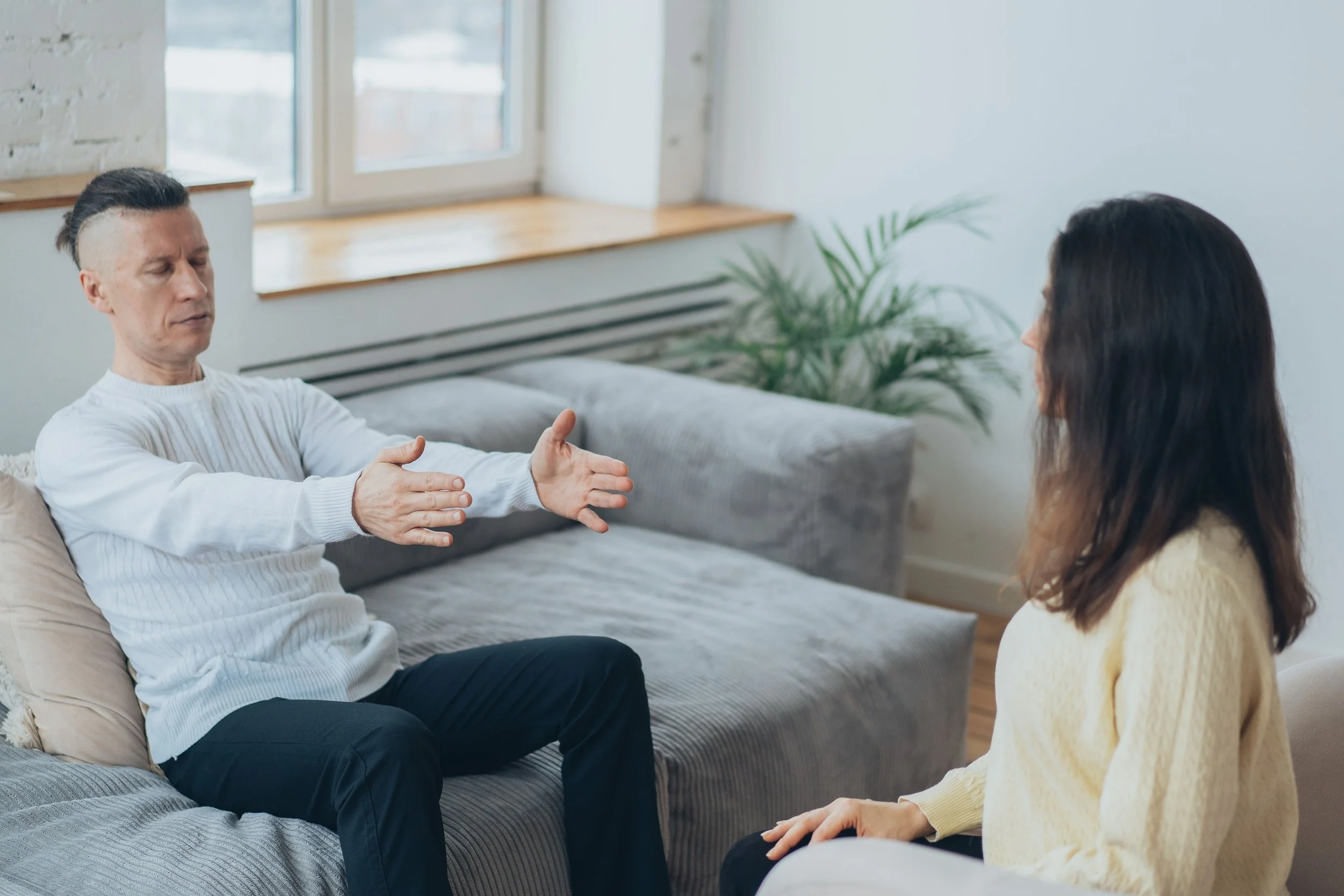
Another interesting part of Patrice’s work is how physical some spiritual experiences can become.
He has observed responses including:
Crying
Shaking
Coughing
Laughter
Burping
Fatigue
Changes in breathing
Body movement
Patrice interprets some of these responses as somatic or energetic release.
People in many forms of body-based, meditative, or emotional work report physical reactions during intense experiences.
But a physical response alone does not tell us exactly what is happening.
It is important not to assume that every shake, cough, pain, or sensation is “energy leaving the body.”
Persistent, severe, or concerning symptoms deserve appropriate medical evaluation.
You can remain spiritually curious without dismissing physical health concerns.
Grounding After an Intense Experience
One thing I really appreciated about Patrice’s approach is how simple his grounding practices are.
After intense sessions, he focuses on ordinary physical care.
Sleep.
Water.
Food.
Massage.
Movement.
Rest.
He particularly enjoys grounding foods such as root vegetables and finds massage deeply supportive.
There is something worth remembering here.
We can spend so much time thinking about energy, intuition, chakras, spiritual downloads, and mystical experiences that we forget:
We still live in bodies.
Sometimes grounding looks incredibly unglamorous.
Eat.
Drink water.
Take a shower.
Go outside.
Sleep.
Spirituality does not have to make basic self-care complicated.
Does Trauma Live in the Body?
Patrice believes that past experiences can continue influencing us physically, emotionally, and energetically.
This overlaps with a broader idea that difficult experiences can affect patterns of stress, emotion, behavior, relationships, and body awareness.
What I would be careful about is assuming that a particular symptom always corresponds with a specific trauma or emotional event.
Human health is much more complex than that.
You can ask:
“What might my body be communicating?”
while also asking:
“Is there a medical explanation I should investigate?”
Those questions can coexist.
Spiritual curiosity does not require choosing one and rejecting the other.
Sometimes the Message Is About Truth, Not Illness
One of Patrice’s most interesting stories involved a psychologist approaching retirement.
She felt stuck and uncertain about who she was becoming.
During their session, Patrice says he received a seemingly strange message:
Buy yourself a dress.
At first, it made no sense.
Then she shared something deeply personal.
Years earlier, after finding her husband dead, she had experienced relief rather than the grief she believed she was supposed to feel.
She described a marriage in which she had felt restricted and unable to express herself freely.
For her, the dress represented something much bigger than clothing.
It represented permission.
Beauty.
Freedom.
Reclaiming herself.
That story captures something I find much more interesting than trying to “diagnose” someone intuitively.
Sometimes intuitive work creates a question.
A symbol.
A reflection.
Something that helps a person see their own life differently.
The power may not be in someone else knowing your answer.
It may be in helping you recognize something you already knew.
A Good Practitioner Should Not Make You Dependent
This was another part of Patrice’s philosophy that really resonated with me.
He does not believe the purpose of his work is to make people dependent on repeated sessions.
Ideally, a person receives insight, integrates what feels useful, and then continues living their life.
That is a standard I think is valuable across all spiritual work.
Whether you are working with:
A healer.
A medium.
An intuitive.
An astrologer.
An Akashic Records practitioner.
A coach.
Or another spiritual teacher…
ask yourself:
Am I becoming more empowered through this relationship—or more dependent?
Healthy spiritual support should strengthen your capacity to make decisions.
Not weaken it.

How to Evaluate a Medical Intuitive or Energy Practitioner
If you are considering working with an intuitive practitioner, discernment matters.
Here are some questions I would ask:
Do They Claim to Diagnose Disease?
That is a red flag if they are not appropriately licensed to do so.
Do They Promise a Cure?
Be very cautious.
No ethical spiritual practitioner should guarantee that their work will cure a medical condition.
Do They Tell You to Stop Medication or Treatment?
That is another major red flag unless the person is the appropriately licensed professional managing that treatment.
Are They Comfortable Saying, “I Don’t Know”?
Humility matters.
Someone who claims certainty about everything deserves extra scrutiny.
Do They Encourage Medical Evaluation When Appropriate?
A grounded practitioner should not be threatened by conventional medicine.
Do You Feel Empowered?
Good support should help you develop greater self-trust.
Are You Allowed to Question Them?
You should always be allowed to disagree.
Your practitioner is not your authority over your own life.
Humility Matters When Working With Spiritual Gifts
Patrice believes intuitive gifts carry responsibility.
He speaks often about humility and the danger of allowing ego to take over spiritual work.
I think this is an important conversation regardless of what intuitive ability someone claims.
Because spiritual experiences can make people feel special.
Chosen.
Powerful.
Certain.
And certainty can become dangerous when discernment disappears.
A grounded spiritual practitioner should remain curious.
They should understand the limitations of what they know.
They should be willing to refer someone to another professional.
And they should never use spirituality to override another person's free will.
Awakening Does Not Mean Becoming Someone Else
Patrice’s story began with crisis.
Grief.
Fear.
Depression.
The possibility of losing everything.
But the most meaningful part of the story is not that trauma somehow made him spiritual.
It is what happened after he began paying attention to his life differently.
He slowed down.
Meditated.
Cared for his body.
Became curious.
Changed his work.
Explored what felt meaningful.
And eventually built a completely different relationship with himself.
Spiritual awakening does not always arrive as light and love.
Sometimes it begins when the life you have been living becomes impossible to continue in the same way.
You start asking:
What actually matters to me?
What am I being called toward?
What am I ready to stop carrying?
Those questions can change a life.
Rachel’s Takeaway
Medical intuition is one of those topics where I think we need to hold curiosity and discernment at the same time.
I am an RN.
I also work deeply in the spiritual and energetic world.
I do not believe those two parts of me have to fight with each other.
We can be curious about intuition.
Energy.
Somatic experiences.
The Akashic Records.
Spiritual healing.
And the extraordinary things people say they experience.
And we can still respect medicine.
Evidence.
Professional scope.
Testing.
Diagnosis.
Safety.
Those things are not enemies.
If an intuitive insight inspires you to pay attention to your body or ask a better question, wonderful.
But intuition should not frighten you away from appropriate healthcare.
And no spiritual practitioner should need you to surrender your judgment in order for their work to have value.
The most grounded spiritual work should help you become more connected to yourself—not less capable of thinking for yourself.
Ready to Go Deeper?
If you are exploring intuition, energy healing, spiritual awakening, or your own relationship with your body and inner knowing, continue the journey with me through Akashic Angels and the Spiritual Spotlight Series.
My intention is to create conversations where science and spirit can exist in the same room—with curiosity, discernment, and respect for both.
Because we do not have to choose between being spiritual and being grounded.
We can be both.
