How Conscious Breathing Can Help You Feel More Grounded: Breathwork, Stress & Spiritual Healing
We breathe all day without thinking about it.
But there is something very different about taking one intentional breath.
For a moment, you stop racing ahead.
You come back into your body.
You notice what you are feeling.
You become present to what is happening right now instead of living entirely inside the next thought, worry, task, or problem.
In my conversation with Dr. Colleen Quinn, we explored breathwork, mindfulness, emotional healing, spirituality, intention, self-awareness, and what can happen when we stop trying to think our way through every experience and begin listening to the body as well.
One of the biggest ideas from our conversation was beautifully simple:
Sometimes healing begins by becoming present enough to notice what is already happening inside you.
And your breath is always available to help bring you back.
Prefer to Watch?
In this episode of the Spiritual Spotlight Series, Dr. Colleen Quinn and I explore conscious breathing, emotional awareness, mindfulness, spiritual healing, intention, and how the breath can become a simple doorway back into the present moment.
Key Takeaways
Conscious breathing can help interrupt mental autopilot and bring attention back to the present moment.
Breathwork may create space to notice emotions, memories, sensations, and patterns that are often overlooked.
Not every difficult emotion needs to be immediately fixed or spiritually explained.
Intention matters, but trying to control every healing experience can create more pressure.
The words we use to describe ourselves can influence the way we relate to temporary experiences.
Breathwork can complement—but should not replace—appropriate medical or mental-health care.
Sometimes one intentional breath is enough to begin reconnecting with yourself.
Why Conscious Breathing Feels Different
Breathing happens automatically.
You do not need to remind yourself every few seconds:
“Inhale.”
“Exhale.”
Your body handles that for you.
But breathing is also one of the bodily processes we can consciously influence.
That makes the breath an interesting bridge between what happens automatically and what we can intentionally bring awareness to.
When you deliberately slow down and notice your breathing, something shifts.
You are no longer only thinking about what happened yesterday or what might happen tomorrow.
You are paying attention to this moment.
That does not mean every conscious breath will create a profound spiritual experience.
Sometimes it simply gives you enough space to ask:
What is happening inside me right now?
And that question alone can be powerful.
Sometimes We Live From the Neck Up
Many of us spend an enormous amount of time in our minds.
We analyze.
Plan.
Worry.
Rehearse conversations.
Anticipate problems.
Try to understand why we feel the way we feel.
Meanwhile, the body may be giving us information that we barely notice.
Tight shoulders.
A clenched jaw.
Shallow breathing.
Fatigue.
Restlessness.
A knot in the stomach.
A need to cry.
The urge to slow down.
Dr. Colleen describes breathwork as one way of moving out of constant mental processing and becoming more aware of what the body may be communicating.
That does not mean every physical sensation has a hidden spiritual meaning.
Sometimes a headache is a headache.
Sometimes you need sleep.
Sometimes you need medical care.
But body awareness can help us become more curious about ourselves instead of automatically overriding everything we feel.
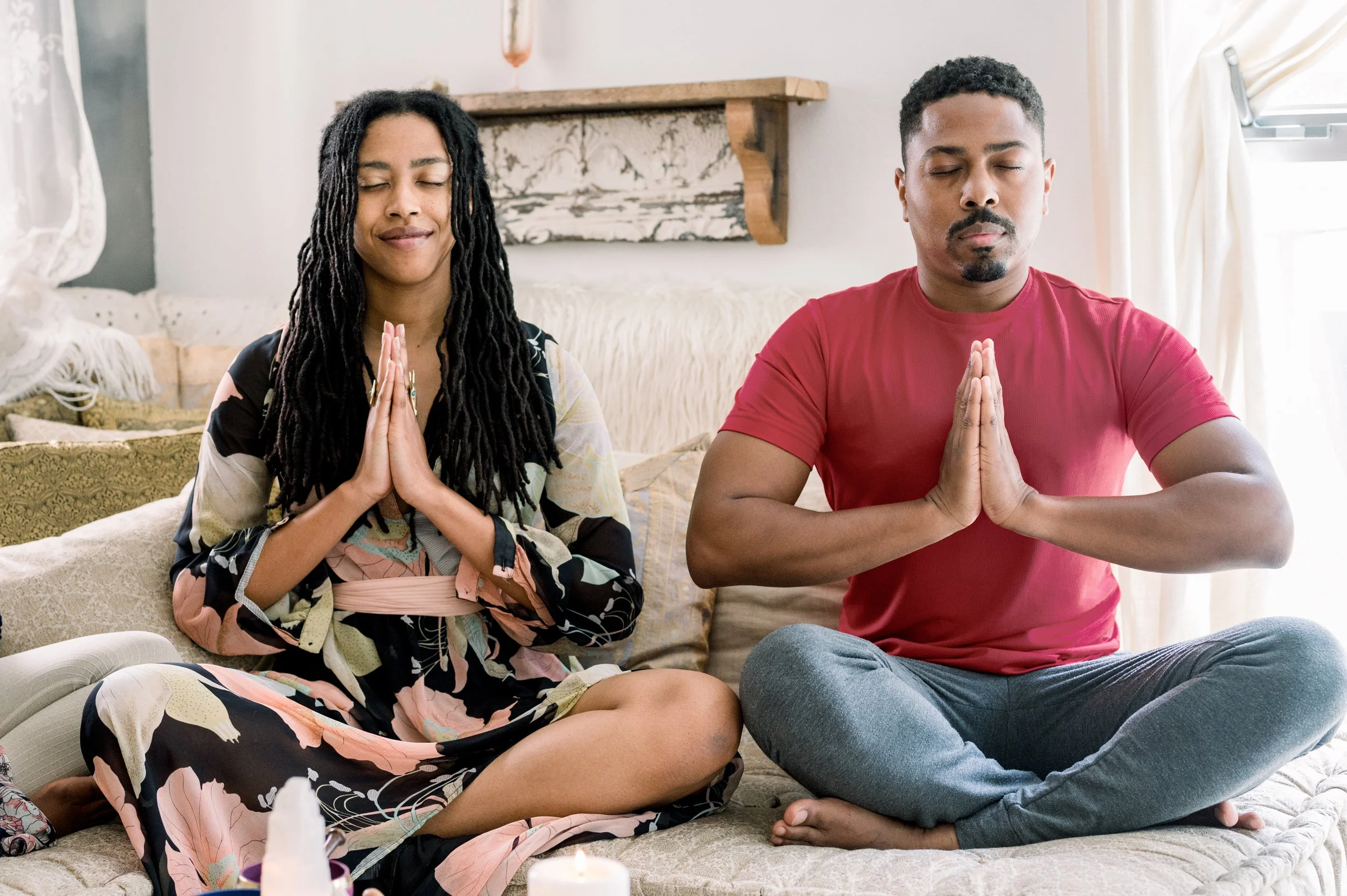
Can Breathwork Help Us Process Emotions?
For some people, deeper breathwork practices can bring strong emotions, memories, physical sensations, or imagery into awareness.
Dr. Colleen shared personal experiences in which breathwork brought forward emotions and memories that she had not consciously connected with before.
She interpreted some of these experiences through the lens of trauma, the nervous system, spirituality, and emotional healing.
Experiences like these can feel very meaningful.
But they can also be intense.
This is why I think it is important to distinguish between a simple grounding breath and more intensive breathwork practices.
A few slow, comfortable breaths are very different from extended or altered-state breathwork.
If you have significant trauma, cardiovascular or respiratory conditions, are pregnant, or have other medical or mental-health concerns, it is wise to speak with an appropriate healthcare professional before participating in intensive breathwork.
Spiritual exploration does not need to mean ignoring safety.
Your Body May Have Something to Say
One of the themes that came through strongly in our conversation was learning to listen to the body.
Sometimes the body reacts before the conscious mind has created a story around what is happening.
You walk into a room and tense up.
You think about a decision and feel your chest tighten.
You encounter someone and immediately feel yourself pulling back.
Or you finally stop moving long enough to realize:
I am exhausted.
That awareness is information.
It does not always tell you exactly what to do.
But it gives you something to explore.
Instead of immediately asking:
“What does this mean spiritually?”
Try asking:
What am I noticing?
What might I need?
What feels supportive right now?
Sometimes awareness is more useful than interpretation.
The Words We Use About Ourselves Matter
Dr. Colleen also spoke about the language we use—especially statements beginning with “I am.”
Consider the difference between:
“I am anxious.”
and
“I am feeling anxious right now.”
Or:
“I am broken.”
and
“I am moving through something difficult.”
The second version creates space.
The feeling is real, but it does not have to become your entire identity.
The same can be true with other experiences:
“I am exhausted” can become “I feel exhausted today.”
“I am a failure” can become “Something did not work the way I hoped.”
“I am stuck” can become “I am not clear on my next step yet.”
This is not about pretending difficult feelings are not happening.
It is not about positive-thinking your way out of reality.
It is about remembering:
You are more than the state you are experiencing in this moment.

Intention Matters—But So Does Surrender
Before a meditation, healing session, or breathwork practice, you may find it helpful to set an intention.
Maybe you want:
Clarity.
Peace.
Self-forgiveness.
Courage.
Connection.
A deeper understanding of something you are experiencing.
But there is a difference between setting an intention and demanding an outcome.
You can ask:
“What would be most supportive for me to understand today?”
and then allow space for whatever comes.
Sometimes what arises may have nothing to do with what you expected.
Sometimes nothing dramatic happens at all.
That does not mean the practice failed.
One of the pressures we can unintentionally bring into spirituality is the expectation that something profound must happen every time.
It does not.
Sometimes the practice is simply breathing.
And sometimes that is enough.
What Is Really Motivating the Choice?
One of the most interesting parts of my conversation with Dr. Colleen involved intention beneath action.
Two people can do the exact same thing for very different reasons.
You can help someone because you genuinely feel called to help.
Or you can help because their discomfort makes you uncomfortable.
You can say yes because you want to.
Or because you are afraid someone will be disappointed.
You can work hard because you love what you are creating.
Or because slowing down makes you feel unsafe.
The action may look identical from the outside.
But the internal experience can be completely different.
Before automatically responding, try asking:
What is actually motivating me right now?
Fear?
Love?
Guilt?
Control?
Scarcity?
Compassion?
Obligation?
Joy?
There is no need to shame the answer.
Just notice it.
Awareness gives you more choice.
Why Do Certain Patterns Keep Repeating?
Most of us eventually notice something we seem to keep doing.
The same relationship dynamic.
The same overgiving.
The same fear.
The same self-doubt.
The same reaction.
And eventually we ask:
Why do I keep doing this?
There may be many reasons.
Past experiences.
Learned behavior.
Environment.
Stress.
Beliefs.
Relationships.
Protective responses.
And sometimes patterns persist simply because we have never slowed down enough to notice them.
Mindfulness, journaling, therapy, spiritual reflection, and breathwork can all create opportunities to observe what is happening before automatically repeating it.
The goal is not to find a mystical explanation for every pattern.
The goal is to create enough awareness that you have a little more choice the next time it appears.
Healing Younger Parts of Yourself
Dr. Colleen also discussed what many people refer to as inner-child work.
The basic idea is that experiences from earlier stages of life can continue influencing the way we respond as adults.
A younger part of you may still believe:
“I have to keep everyone happy.”
“I am not safe saying no.”
“I have to earn love.”
“I cannot make mistakes.”
“I need to stay invisible.”
When one of those reactions shows up, instead of immediately criticizing yourself, try becoming curious.
Ask:
What am I afraid will happen?
When did I learn this?
What does this part of me need right now?
You do not need to turn every uncomfortable reaction into a deep healing excavation.
Sometimes simply meeting yourself with more compassion interrupts the old pattern.
A Simple Breath Practice for Coming Back to the Present
You do not need special equipment.
You do not need an hour.
You do not even need to be particularly good at meditating.
Try this:
Sit or stand somewhere comfortable.
Let your breathing remain easy and natural.
Slowly notice one inhale.
Slowly notice one exhale.
Feel where the breath moves in your body.
Notice your feet, your hands, and the space around you.
Ask yourself: “What do I need in this moment?”
Then breathe again.
Do not force yourself to receive an answer.
The practice is noticing.
If focusing closely on your breath makes you feel more anxious or uncomfortable, you can instead ground through your senses—notice something you can see, hear, or physically feel.
There is no prize for forcing a spiritual practice that does not feel supportive.

Sat Nam as a Breath Anchor
Dr. Colleen shared a mantra she uses with the breath:
Sat Nam.
In yogic traditions, the phrase is often translated in ways connected with truth or true identity.
You can silently think:
“Sat” as you inhale.
“Nam” as you exhale.
Rather than needing to interpret the mantra perfectly, you can simply use it as an anchor for attention.
Inhale.
Sat.
Exhale.
Nam.
And return.
It can become a simple reminder that you are here.
In this body.
In this moment.
Breathing.
Spiritual Healing Does Not Have to Be Dramatic
This may be one of the biggest takeaways for me.
Healing can happen during profound spiritual experiences.
But it can also happen in incredibly ordinary moments.
When you pause instead of reacting.
When you recognize an old pattern.
When you let yourself cry.
When you choose not to say yes automatically.
When you take three slow breaths before answering an email.
When you notice the trees while walking outside.
When you look someone you love in the eyes and actually listen.
Spirituality does not have to remove us from ordinary life.
It can help us become more present inside it.
Rachel’s Takeaway
One thing I keep coming back to is how complicated we can make healing.
We search for the next modality.
The next answer.
The next breakthrough.
The next thing to fix.
But your breath has been with you the entire time.
You do not need to use breathing as another performance.
You do not have to breathe perfectly.
You do not need every conscious breath to unlock a hidden memory or create some enormous spiritual experience.
Sometimes a breath can simply say:
Come back.
Come back to your body.
Come back to this moment.
Come back to what you are actually feeling.
Come back to yourself.
And maybe that is where healing begins—not because one breath magically fixes everything, but because one breath gives you a moment of awareness.
And awareness gives you choice.
Ready to Go Deeper?
If you are exploring mindfulness, spiritual healing, intuition, energy, or ways to feel more connected with yourself, you are invited to continue the journey with me through Akashic Angels and the Spiritual Spotlight Series.
My intention is to explore healing in a way that honors both spiritual curiosity and grounded self-awareness.
Because healing does not always have to be dramatic.
Sometimes it begins with one conscious breath.
